

TIANSHUI | MANUFACTURED IN TAIWAN
Swing Flood Gates
TIANSHUI swing flood gates feature hinged gate panels designed for convenient operation and dependable flood protection. Available in single-leaf, double-leaf, and folding configurations, each system can be customized according to opening dimensions, available operating space, and project requirements. Manufactured in Taiwan for commercial buildings, industrial facilities, and infrastructure applications.
Single-Leaf Gates
Double-Leaf Gates
Folding Flood Gates
Custom Gate Configurations
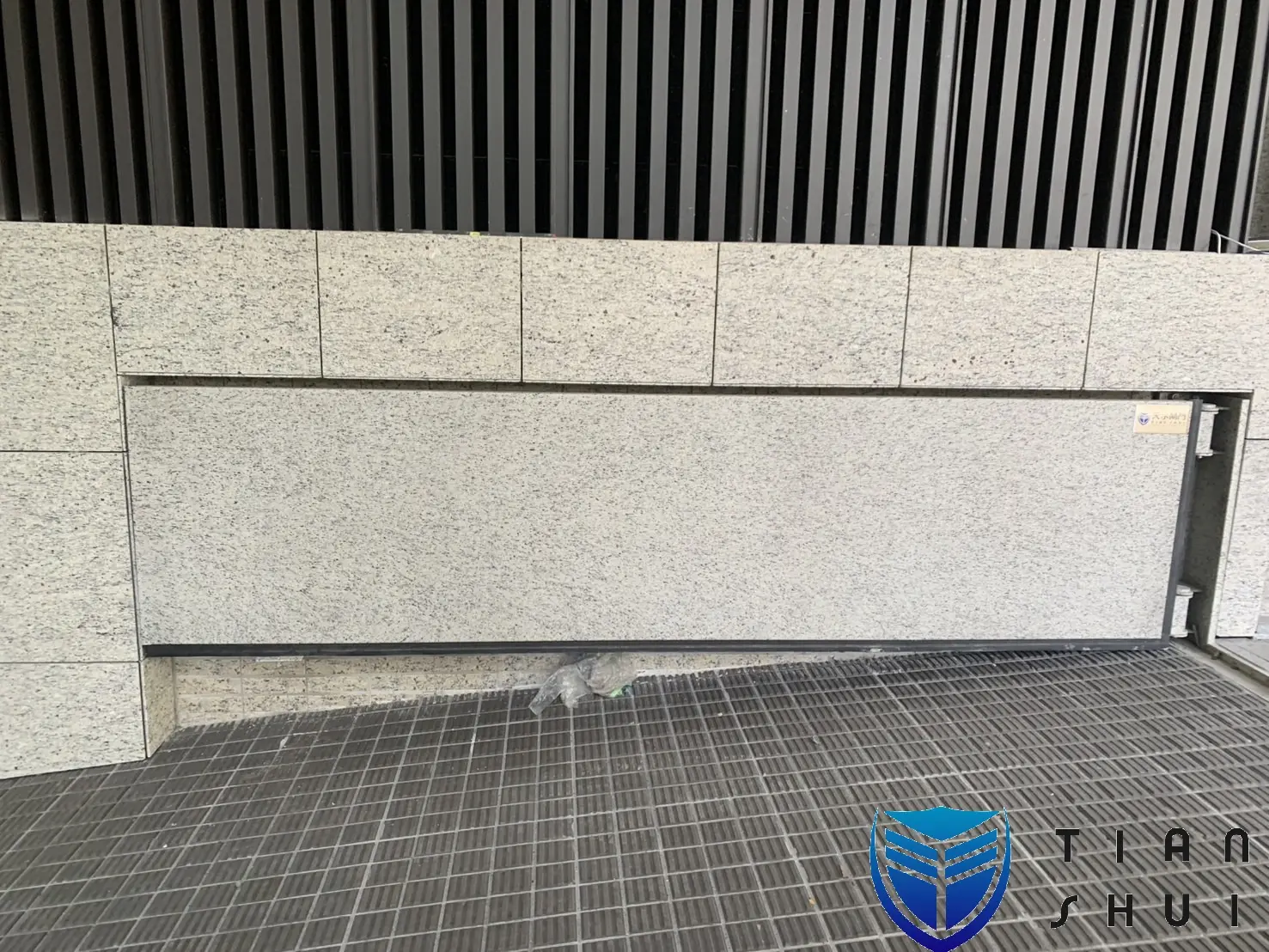
Swing Flood Gate Systems
TIANSHUI swing flood gates use hinged gate panels that remain mounted at the opening for convenient deployment when flood protection is needed. Single-leaf, double-leaf, and folding configurations are available to suit different opening dimensions, operating clearances, and project requirements.
Three Swing Flood Gate Configurations
Choose a single-leaf, double-leaf, or folding gate based on opening width, swing clearance, and available storage space. The final arrangement is determined by project-specific requirements.
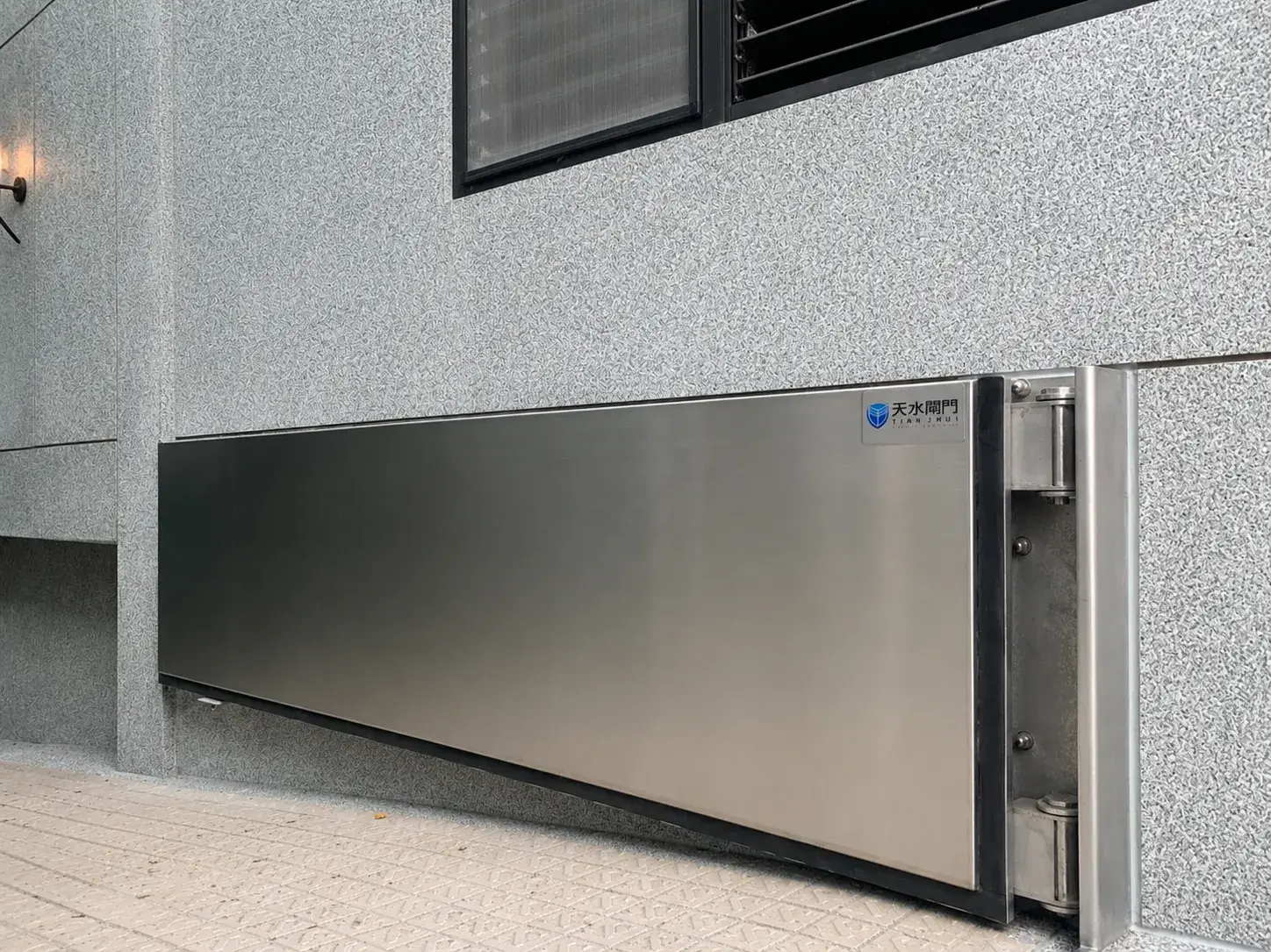
01 / SINGLE-LEAF
Single-Leaf Swing Gate
One hinged gate leaf operates from one side. Suitable where sufficient swing radius and wall-side storage space are available.
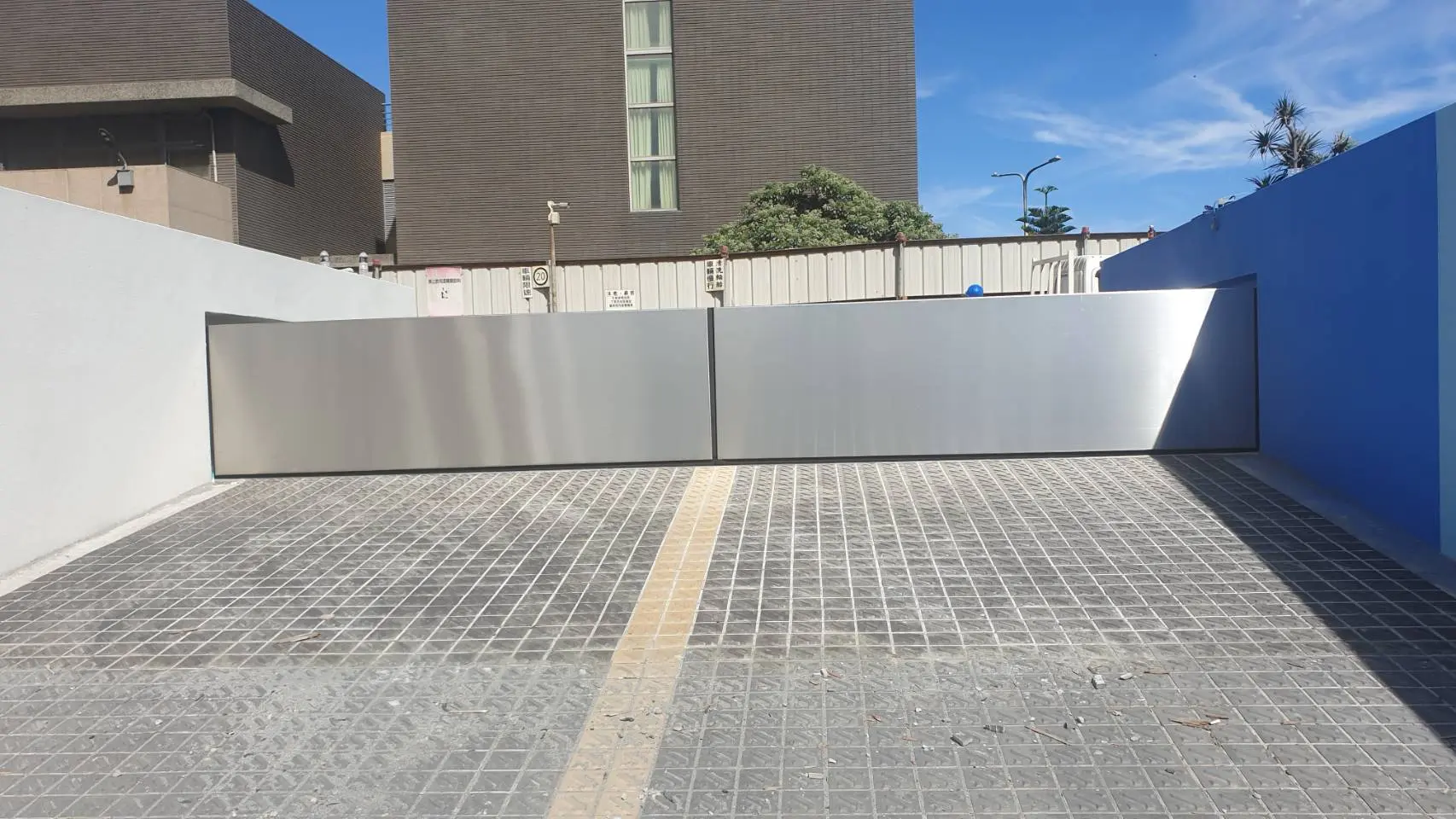
02 / DOUBLE-LEAF
Double-Leaf Swing Gate
Two gate leaves meet at the center. This arrangement can reduce the length and swing radius required for each leaf on wider openings.
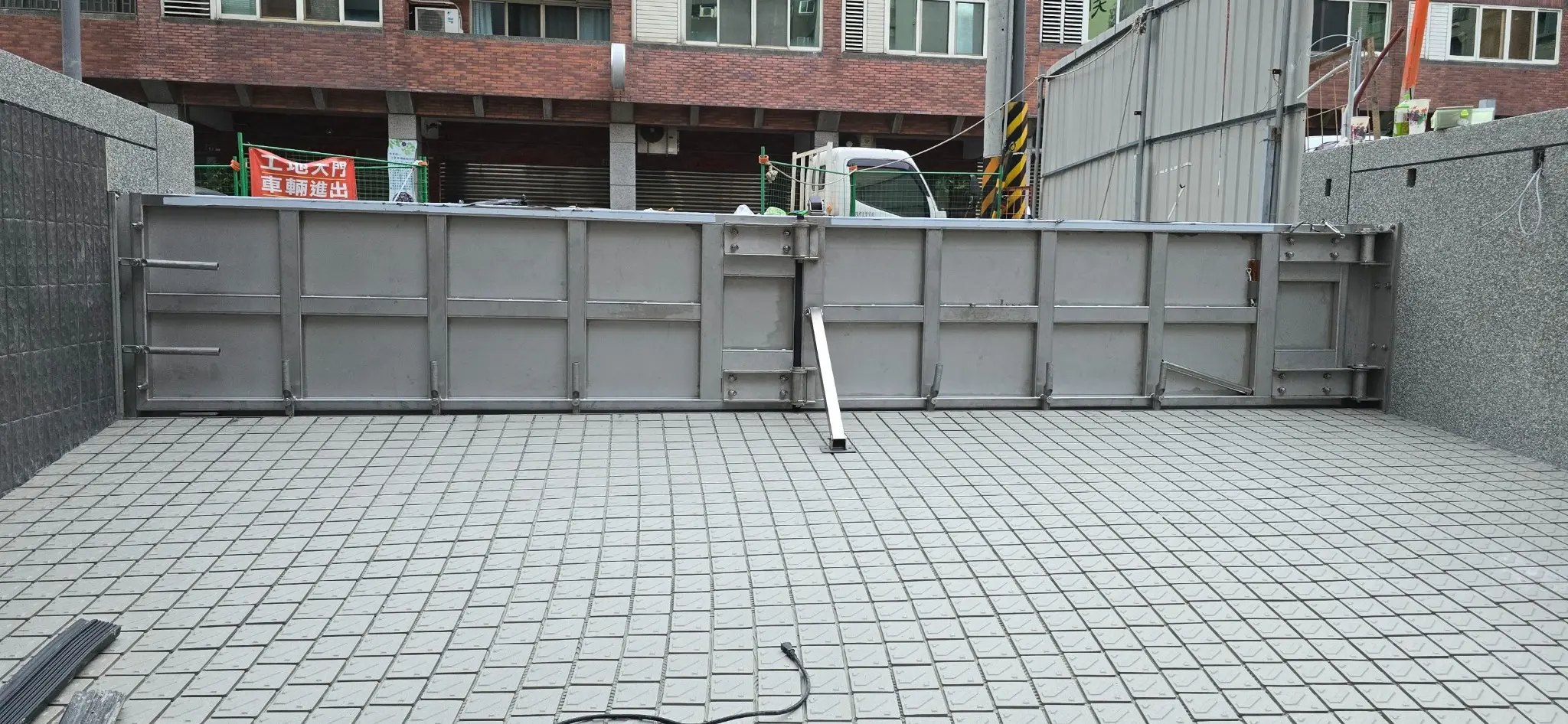
03 / FOLDING
Folding Flood Gate
Hinged sections fold for more compact storage. A useful option where wall-side clearance or the available swing area is limited.
FOLDING DETAIL
Compact Storage with Intermediate Hinges
The folding design uses additional hinges between gate sections, reducing the lateral space needed for storage. Hinge arrangements are customized for the opening.
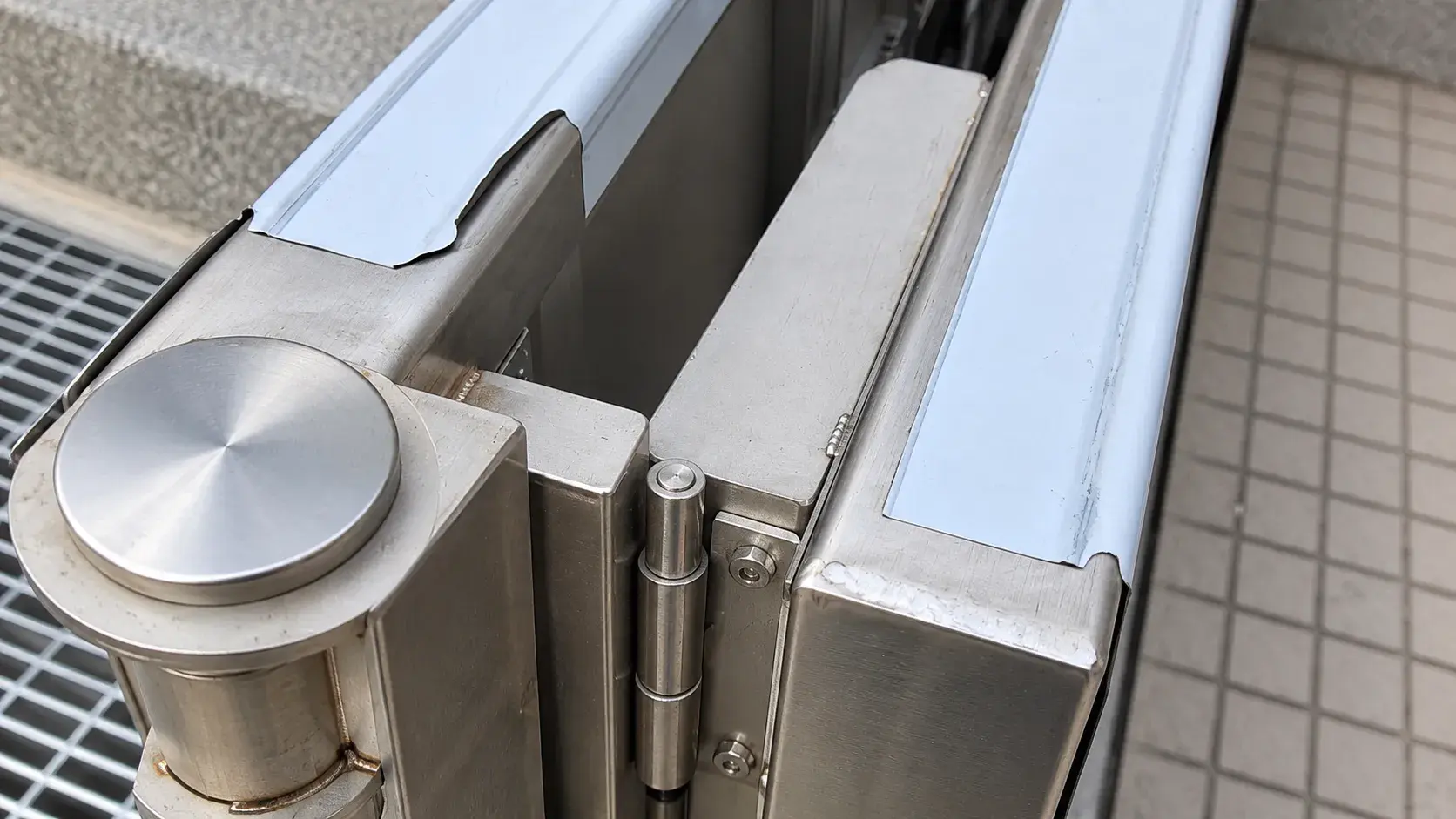
SUS304 Stainless Steel & Custom Finishes
TIANSHUI swing flood gates are manufactured using SUS304 stainless steel gate bodies. Finish options can be coordinated with the surrounding building façade, subject to gate dimensions and engineering details.
01 / HAIRLINE FINISH
SUS304 Hairline Finish
A clean, brushed stainless steel appearance for entrances, parking areas, and industrial applications.
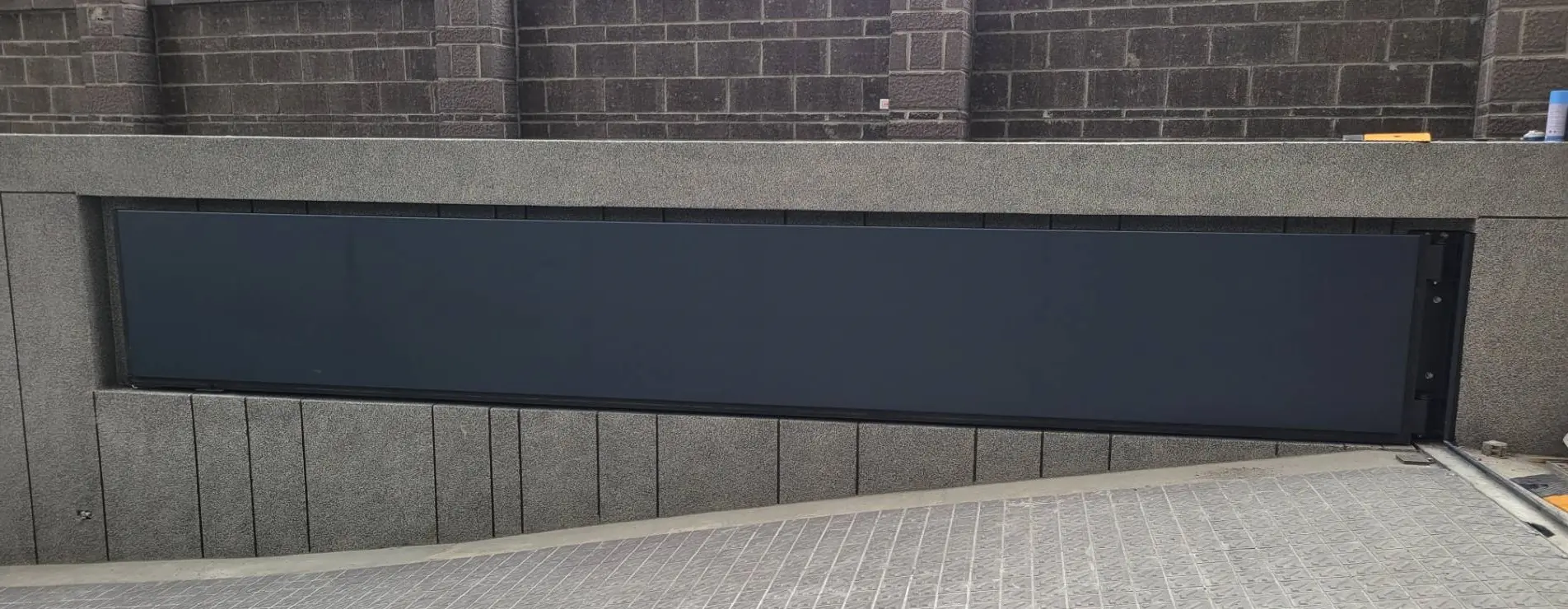
02 / COATING
Fluorocarbon Coating
Custom colors may be specified to complement the surrounding architectural finish.
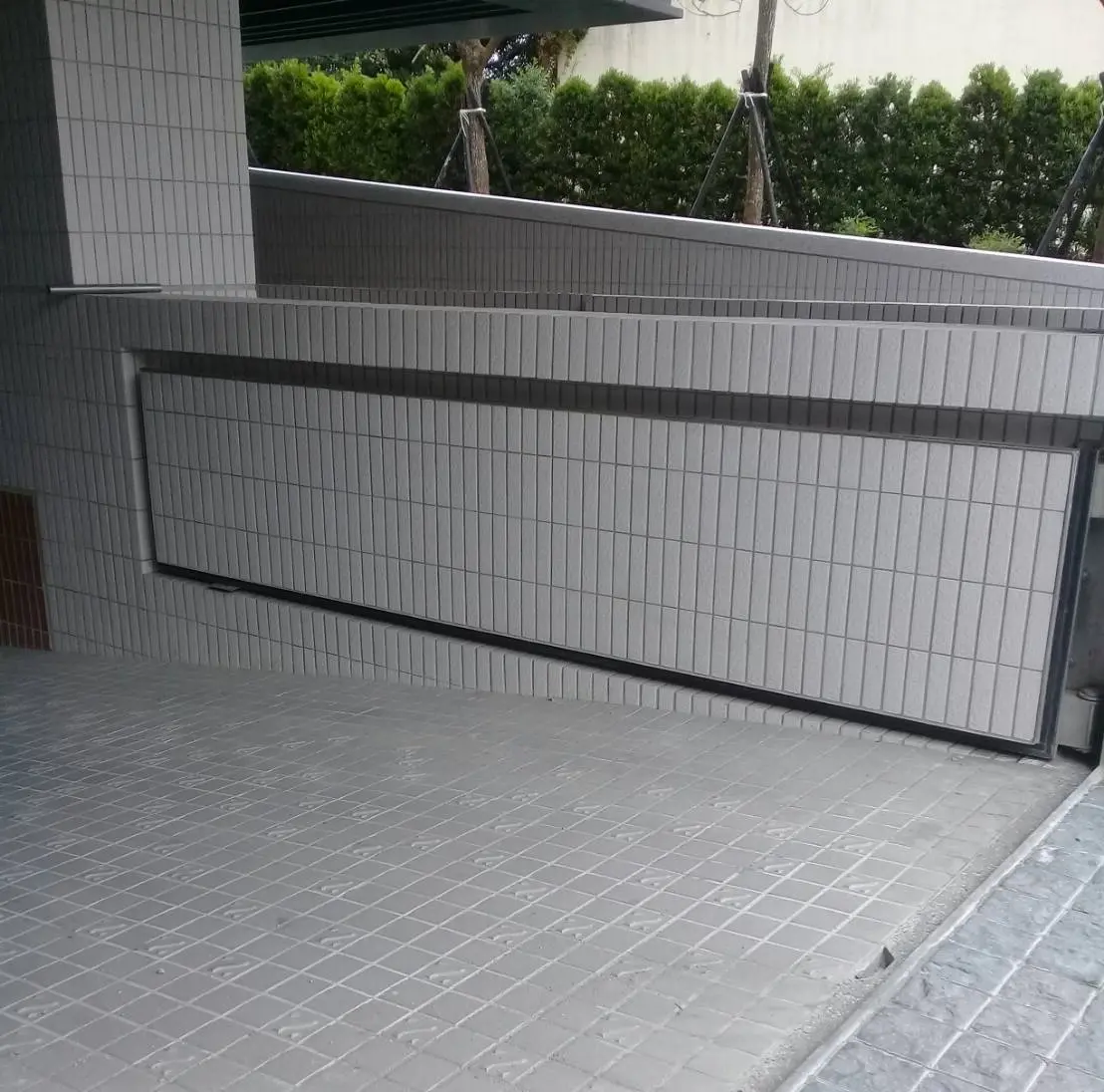
03 / TILE FINISH
Tile-Clad Finish
Allows the visible gate face to be integrated with adjacent tiled surfaces.
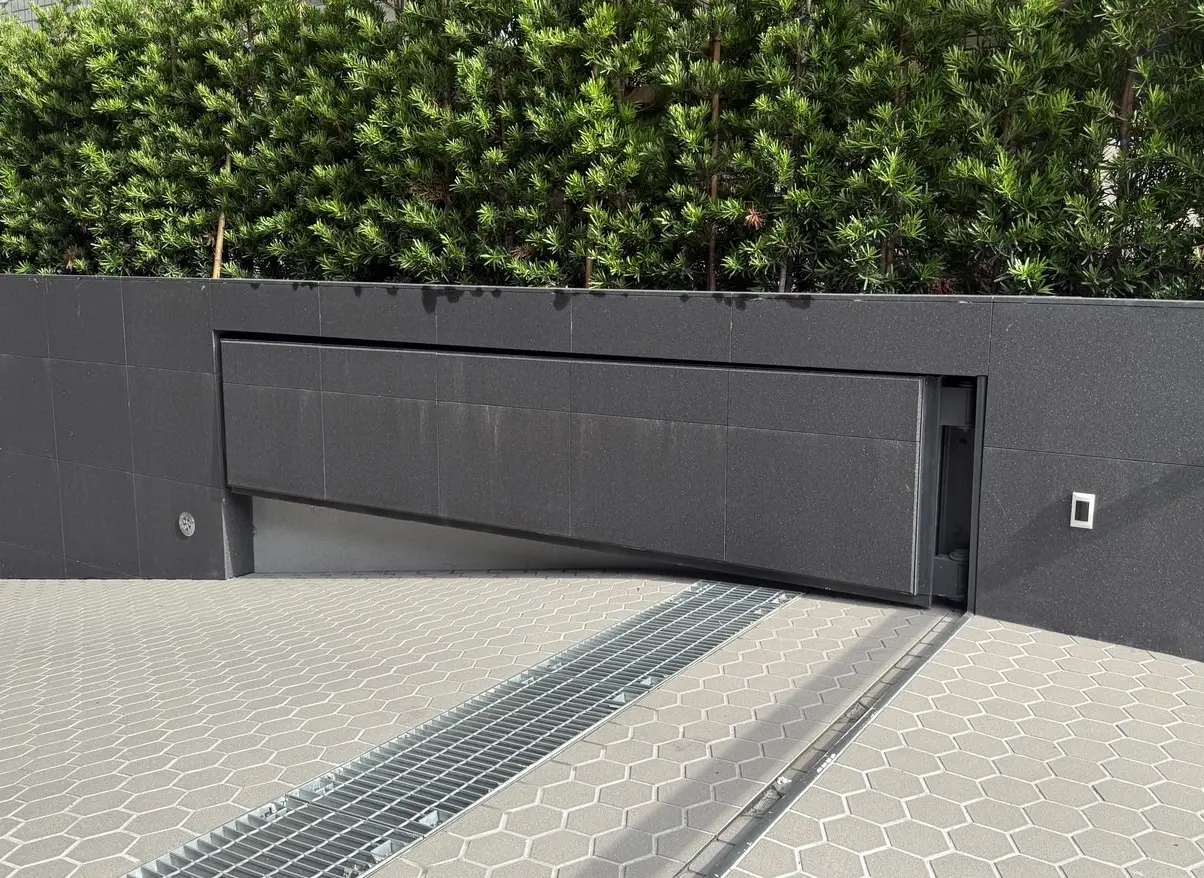
04 / STONE FINISH
Stone-Clad Finish
Designed to coordinate with stone façades in lobbies and commercial buildings.
Custom finishing: Surface materials, colors, cladding weight, attachment methods, and clearances must be evaluated as part of the complete gate design.
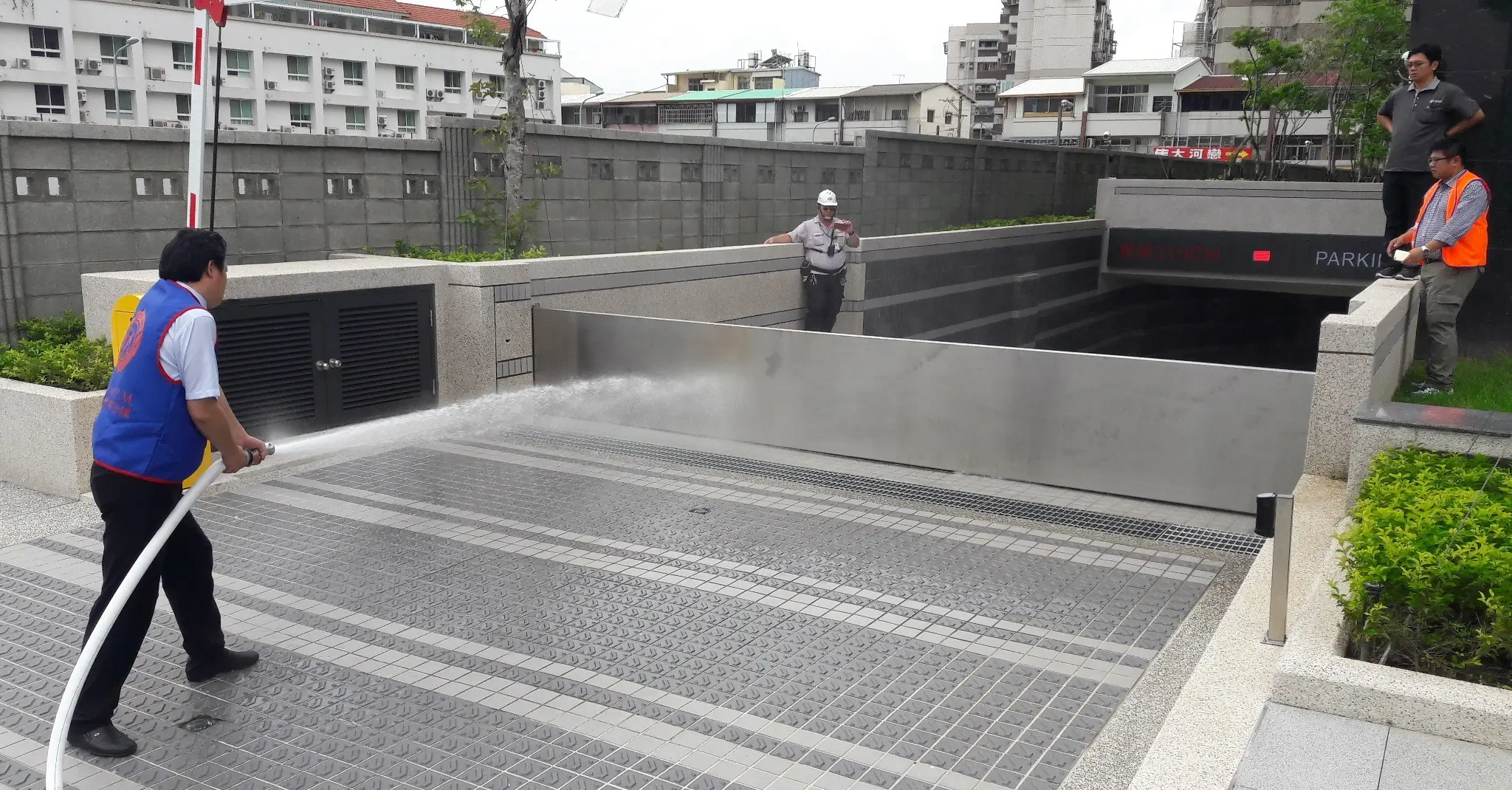
SEALING SYSTEM
Mechanical Compression & EPDM Seals
After the hinged gate is moved into position, compression mechanisms press the EPDM gaskets against the frame and sealing surfaces to form the intended water-resisting interface.
- Mechanical compression: clamping mechanisms secure the gate against the sealing interface.
- EPDM gaskets: properly compressed gaskets maintain contact with the frame and floor.
- Site interfaces: floor, wall, frame, and mounting details must be considered together.
Testing and acceptance: Third-party testing or inspection can be arranged according to project requirements. No universal leakage rating is implied by this photo.
Structure, Rotation Method & Compression System
An integrated gate-leaf design is engineered according to the clear opening, design water level, structural loads, and operating requirements. Reinforcement members, hinge-side rotation, and the compression sealing system work together to provide structural strength, operational convenience, and water-resisting performance.
STRUCTURE
Internal Gate Structure
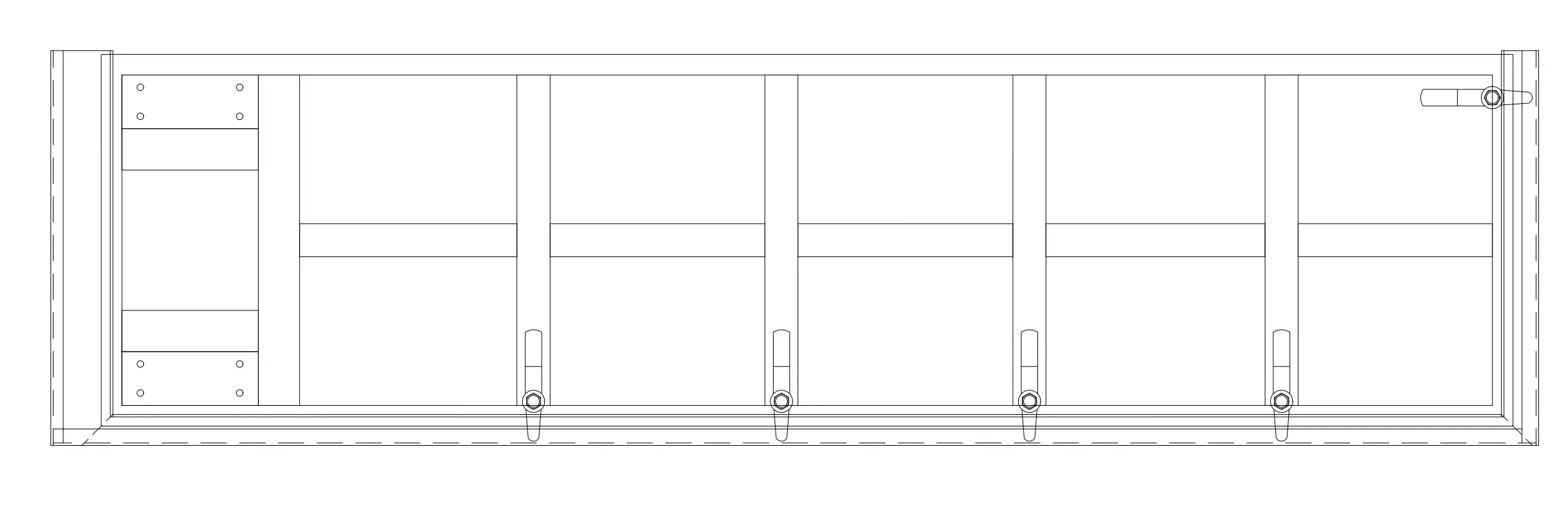
01Reinforced Gate LeafInternal reinforcing members are arranged according to the gate dimensions, design water level, and project loading conditions.
02Compression MechanismAfter the gate leaf is closed, the compression hardware applies force so the gate body seats firmly against the frame and sealing surfaces.
03Hinge-Side Rotation SupportThe gate leaf is supported at the hinge side for daily opening, closing, and wall-side storage.
FRONT VIEW
Closed Position
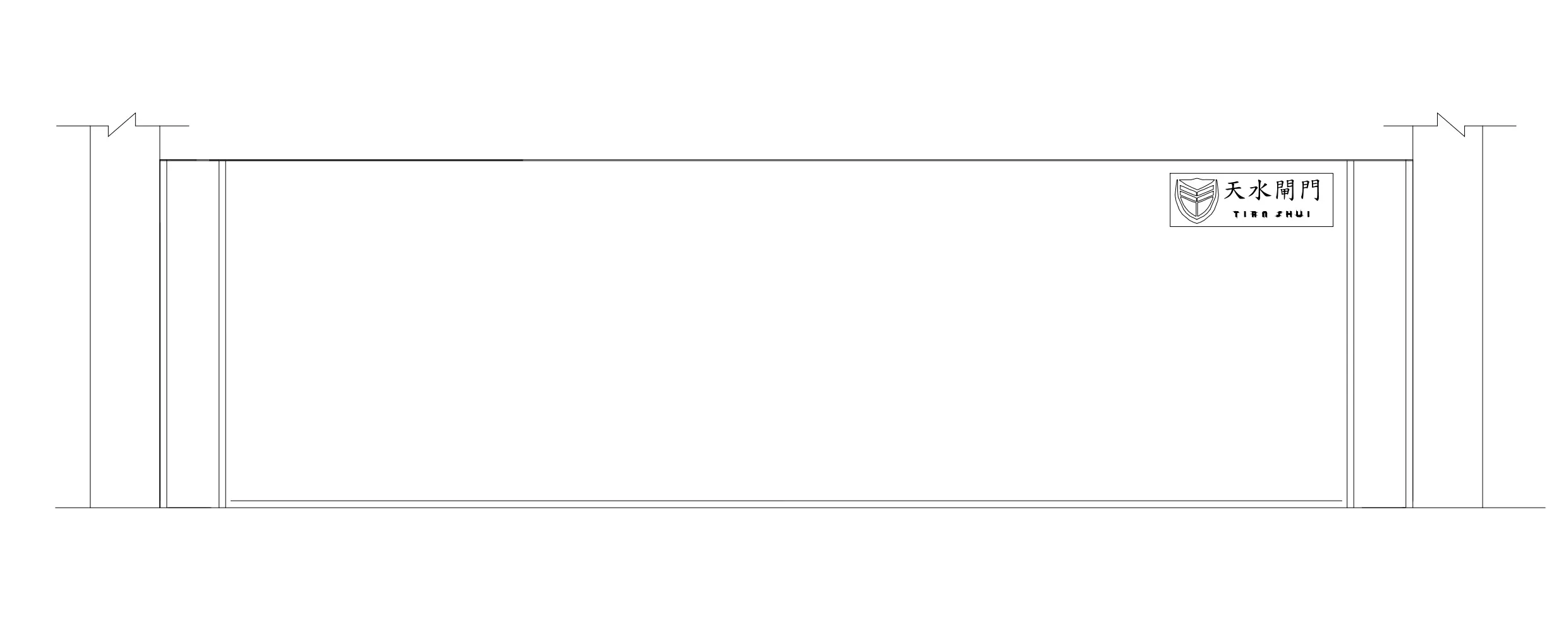
Integrated Flat Gate Face
When closed, the gate forms a continuous sealing face. Dimensions are configured according to the clear opening and project requirements.
TOP VIEW
Rotation & Opening Path
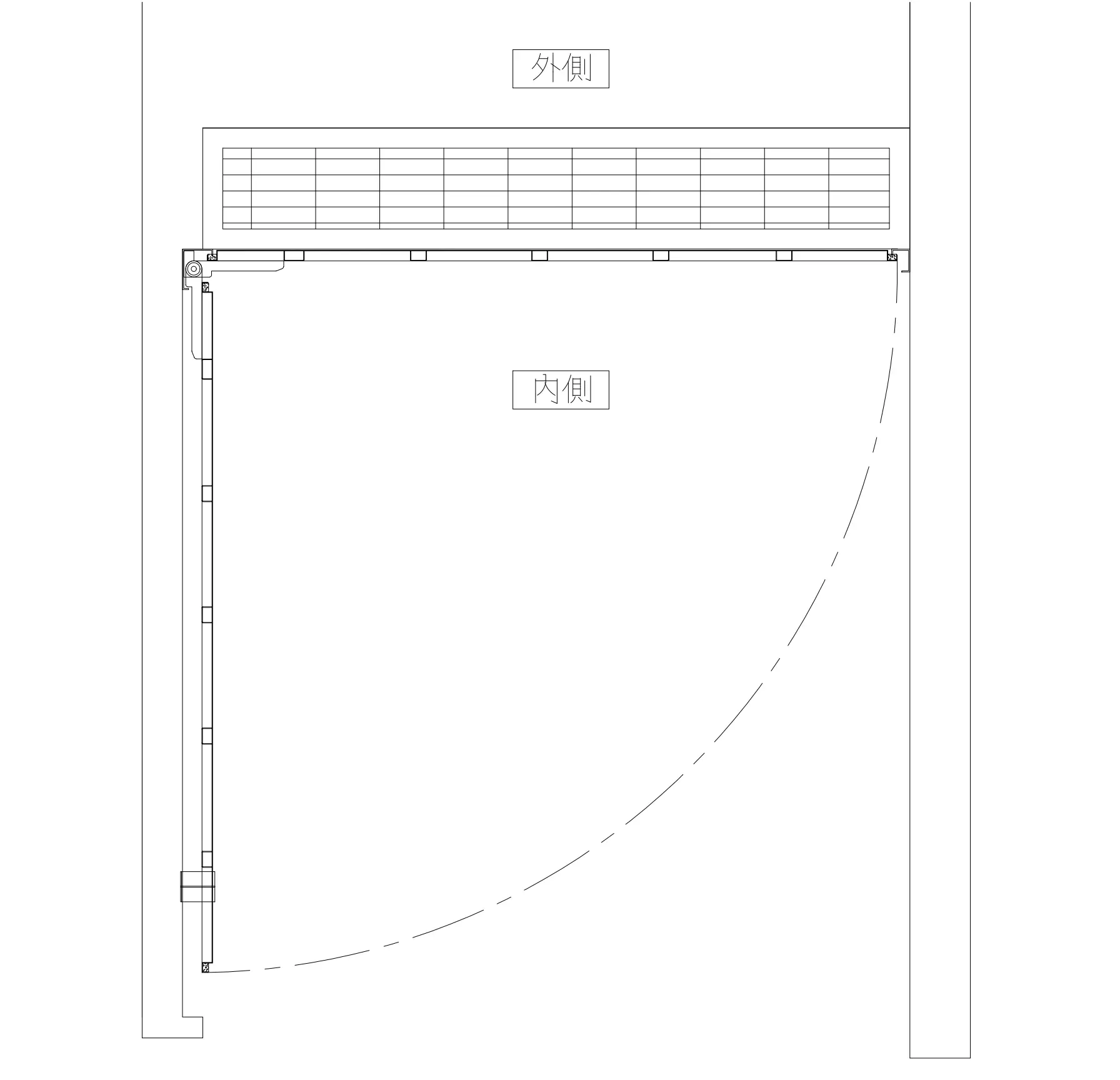
Rotate Open, Store Along the Wall
The gate leaf rotates from the hinge side and can be stored against the wall during normal conditions, then quickly closed back into the flood-protection position when needed.
COMPRESSION SYSTEM
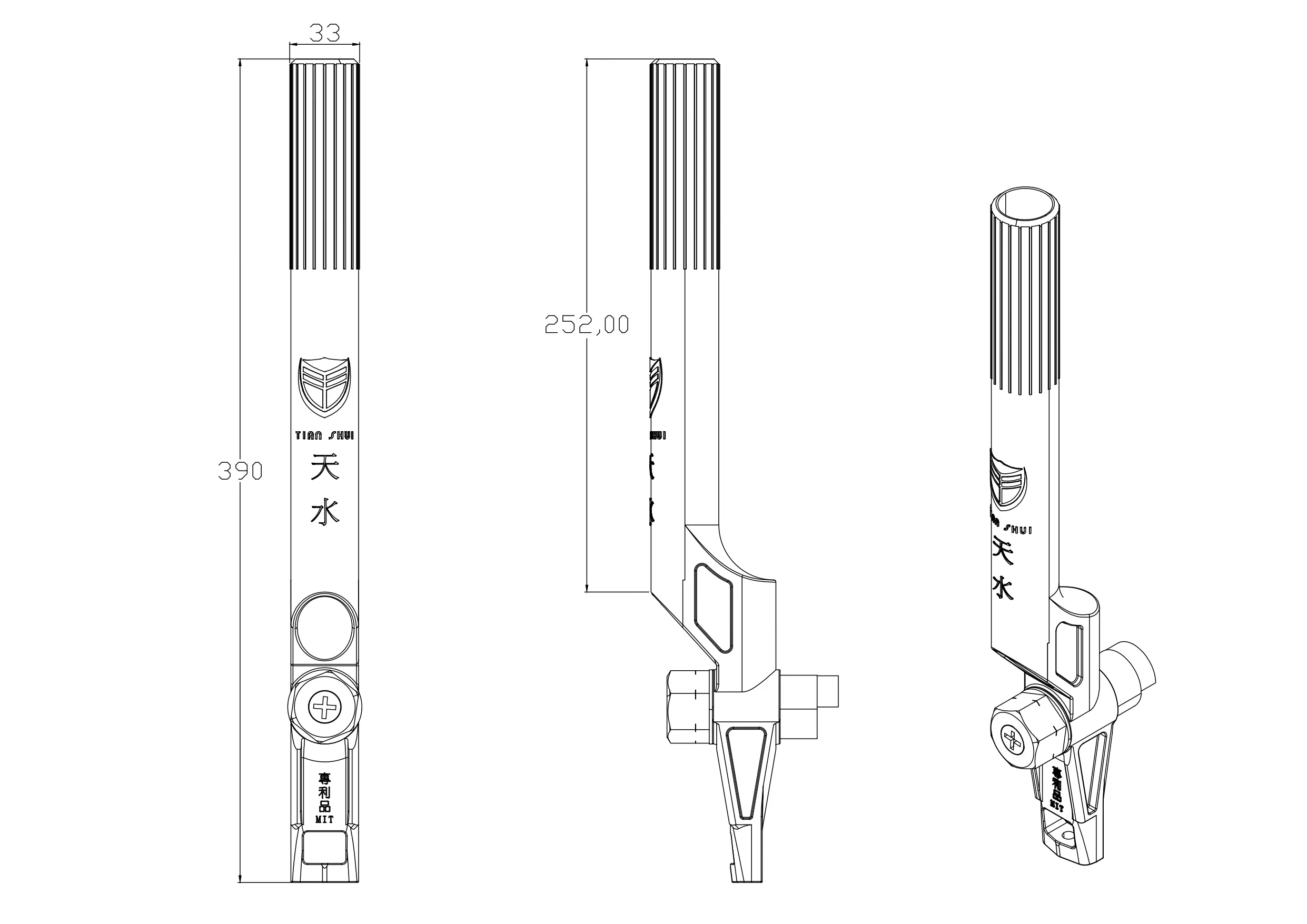
Patented Compression Handle
Once the gate leaf is aligned in the closed position, the compression handle provides mechanical force so the gate leaf fits tightly against the frame and sealing surfaces. This keeps the sealing gaskets under the intended compression and helps form a stable water-resisting barrier.
Related Technical ResourcesMaterial specifications and testing references are available online. Project-specific swing gate drawings and structural calculations may be requested for technical review, subject to project requirements and availability.
Opening Dimensions, Design Water Level & Swing Clearance
Each gate is configured for the specified opening, expected floodwater level, gate-leaf weight, structural loading, rotation path, and available storage space.
01
Required Protection Height
Establish a project-specific design water level based on local flood risk, site elevations, and the owner's requirements.
02
Opening & Structural Loads
Evaluate gate dimensions, leaf weight, hinge and frame loads, and suitable mounting structures.
03
Swing & Storage Space
Confirm clearance for opening, closing, and retaining the gate when not in use. Consider a double-leaf or folding configuration when space is limited.
Allow for future flood protection needs during initial design. Hinged gate leaves are custom fabricated; increasing the protection height after manufacture may require redesign and replacement rather than simply adding panels. Existing threshold components require separate assessment before reuse.
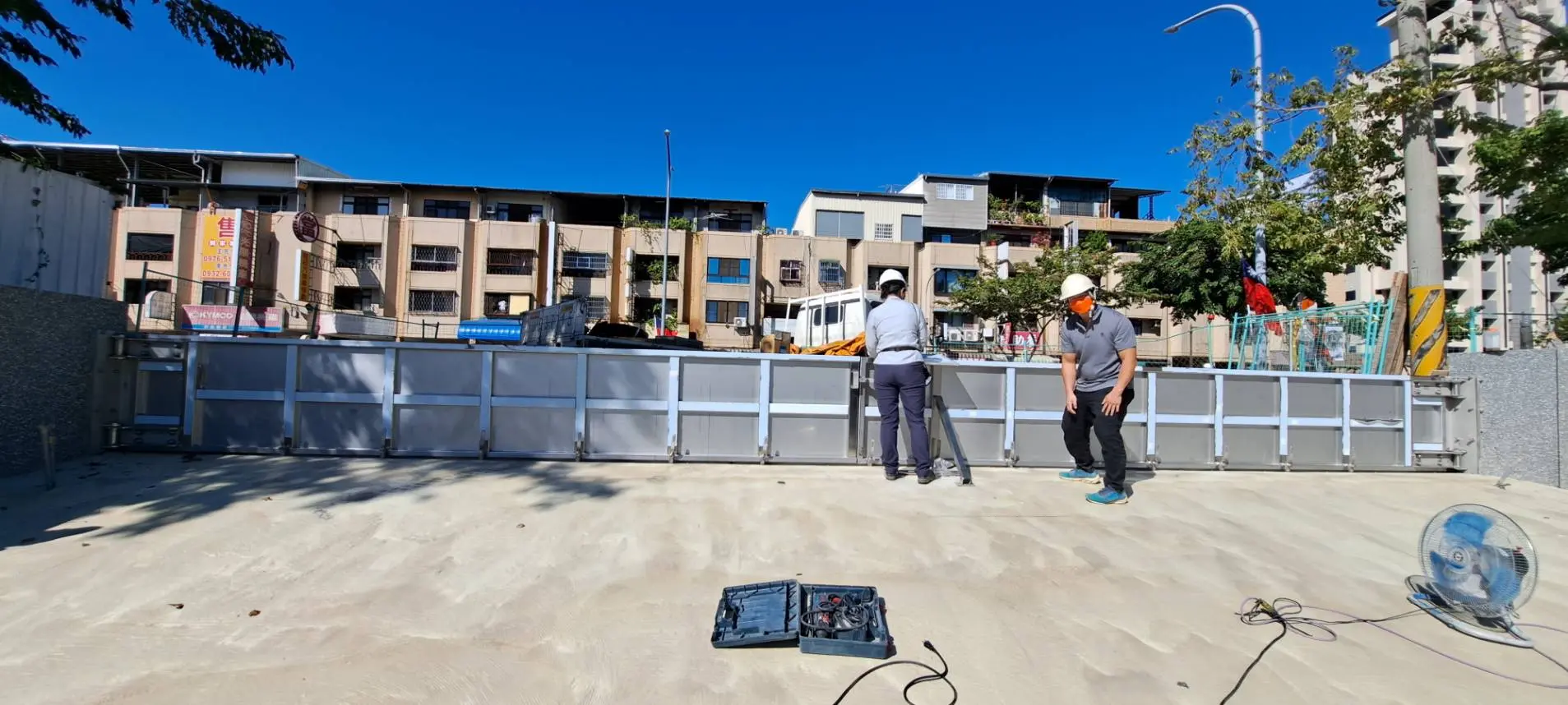
LARGE OPENING PROJECT · AS REPORTED
Jiushe Park Underground Parking Facility
Reference project with an opening of approximately W1200 × H90 cm. Gate configuration considers opening width, loads, and operating conditions.
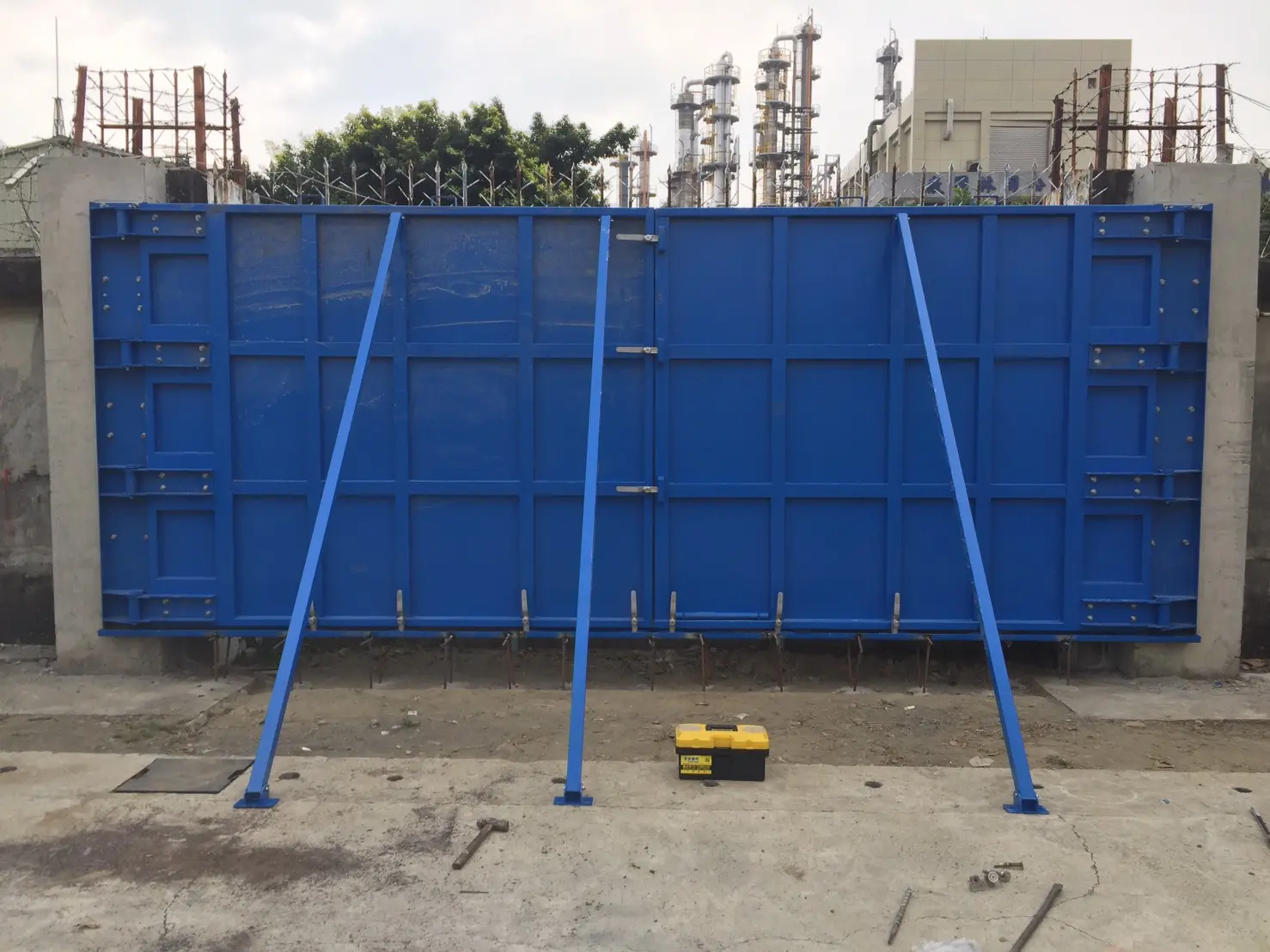
HIGH PROTECTION PROJECT · AS REPORTED
CPC Linyuan Industrial Plant
Reference project with dimensions of approximately W600 × H240 cm. Structural support was planned to suit the specific gate size and design loads.
Project examples are not standard product size limits. All dimensions, allowable design water levels, and structural details must be verified for each order. Floor thresholds may require additional accessibility or vehicle-transition details.
Designed for Access, Ready for Flood Deployment
Unlike removable-panel systems, swing gate leaves remain installed at the opening. When flood protection is needed, the gate is rotated into position and compressed against its sealing surfaces.
01
Store at the Wall
When not deployed, secure the open gate in its designated wall-side position to keep the primary passage clear.
02
Close & Position
Release the storage restraint and rotate the gate into its flood-protection position.
03
Engage Compression
Operate the designed compression handles or clamps and verify the sealing contact and support arrangement.
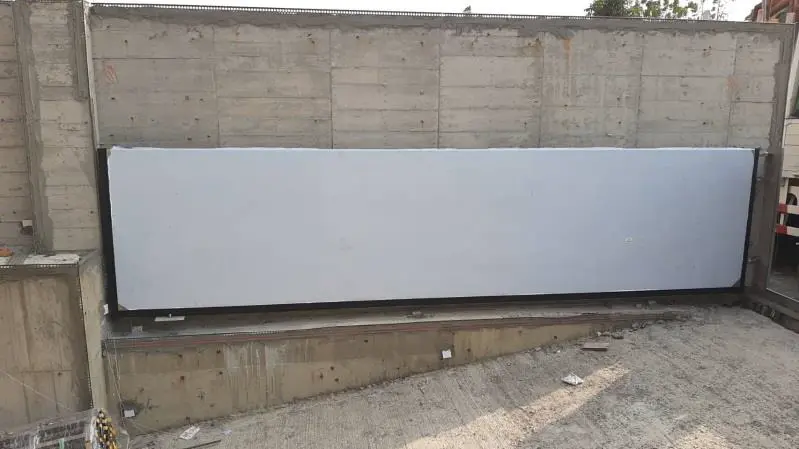
Wall-Side Gate Storage
Open leaves can be secured beside the opening between flood events.
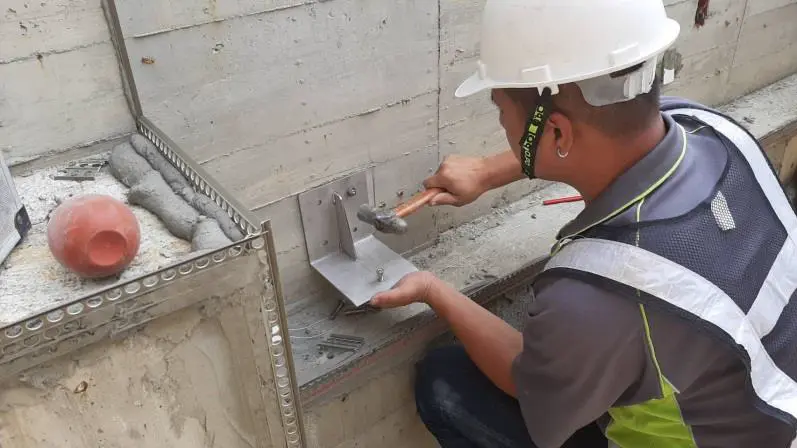
Support & Retaining Fixtures
Project-specific restraints and support fixtures help stabilize the stored gate.
Routine care: Operate and inspect gates periodically; before deployment, clear grit and debris from the threshold and sealing surfaces, and inspect the hinges, compression hardware, and EPDM gaskets.
Single-Leaf Swing Flood Gate Operation
Watch a project-specific demonstration of gate deployment, compression-handle operation, and stainless steel diagonal support fixing.
OPERATION HIGHLIGHTS
What This Video Shows
- Rotating and positioning the single gate leaf.
- Operating the mechanical compression handles.
- Positioning and securing stainless steel diagonal supports.
Note: Gate dimensions, support details, and operating procedures may vary. Follow the approved drawings and instructions supplied for each project.
Swing Flood Gates in Real Projects
Examples of TIANSHUI swing flood gate applications in transport facilities, public buildings, driveways, and industrial entrances.
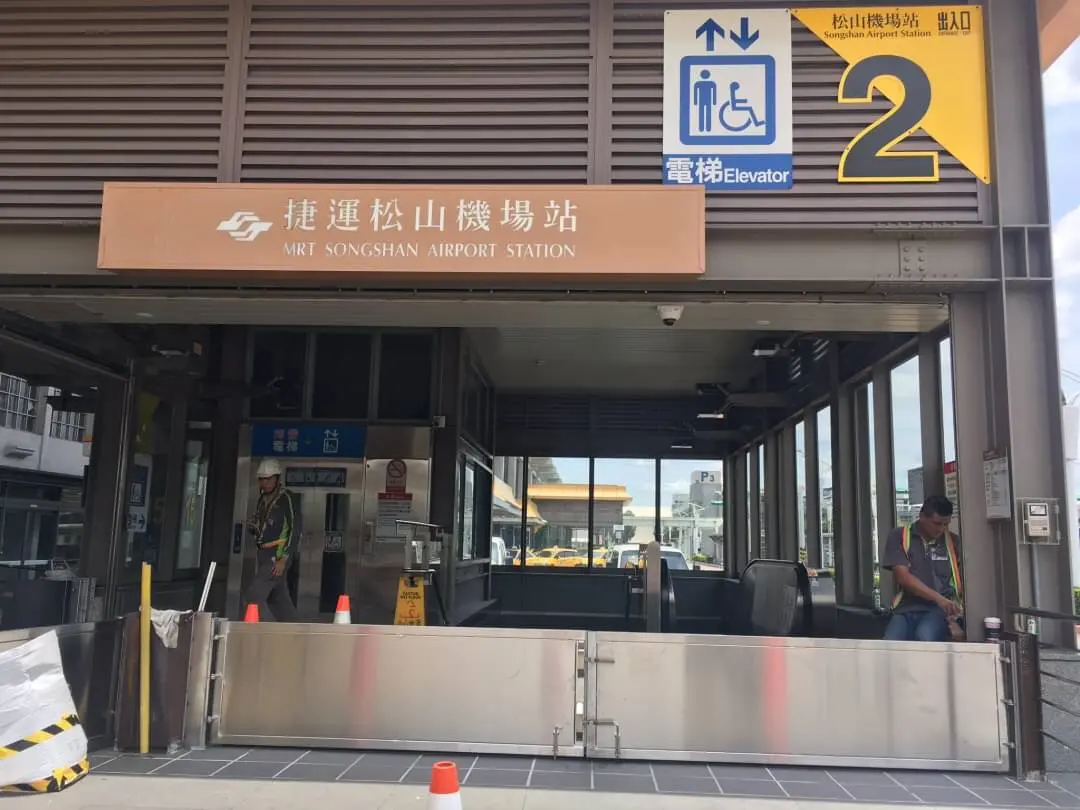
PUBLIC TRANSPORT
Taipei Metro – Songshan Airport Station
Gate design coordinated with entrance geometry, daily public access, and flood protection requirements.
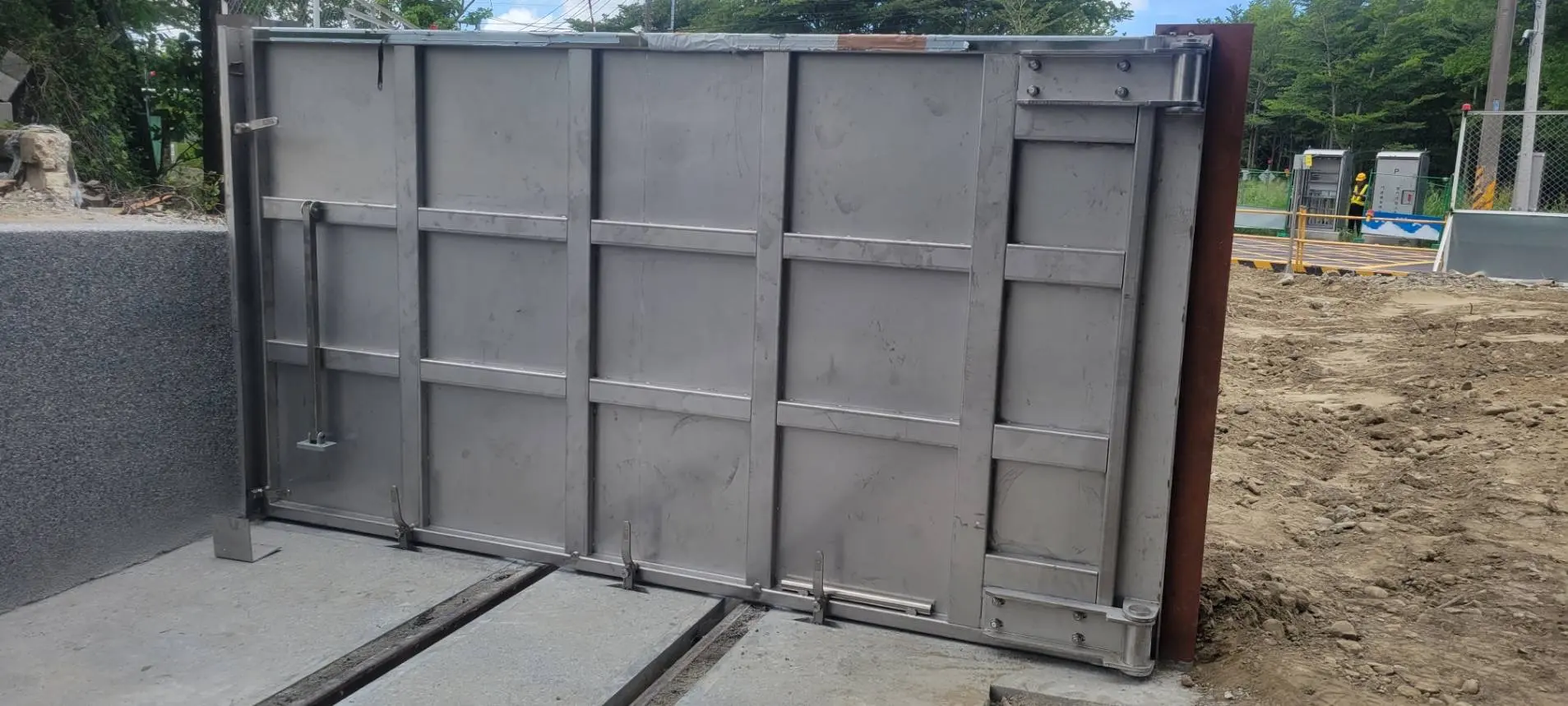
PUBLIC FACILITY
National Palace Museum – Southern Branch
Custom gate design for site-specific opening, operating, and sealing requirements.
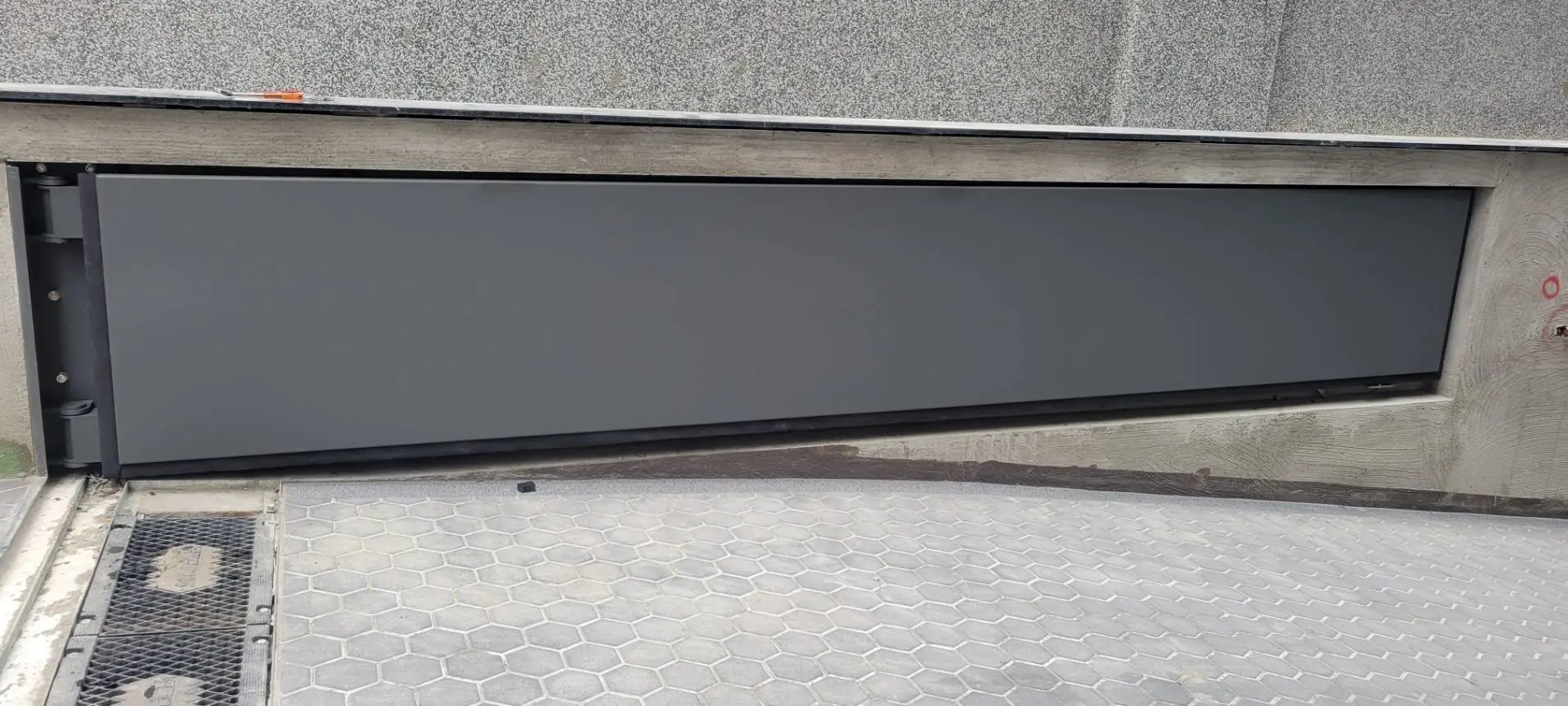
DRIVEWAY ACCESS
Driveway Entrances
Configured around traffic clearance, floor conditions, swing radius, and storage space.
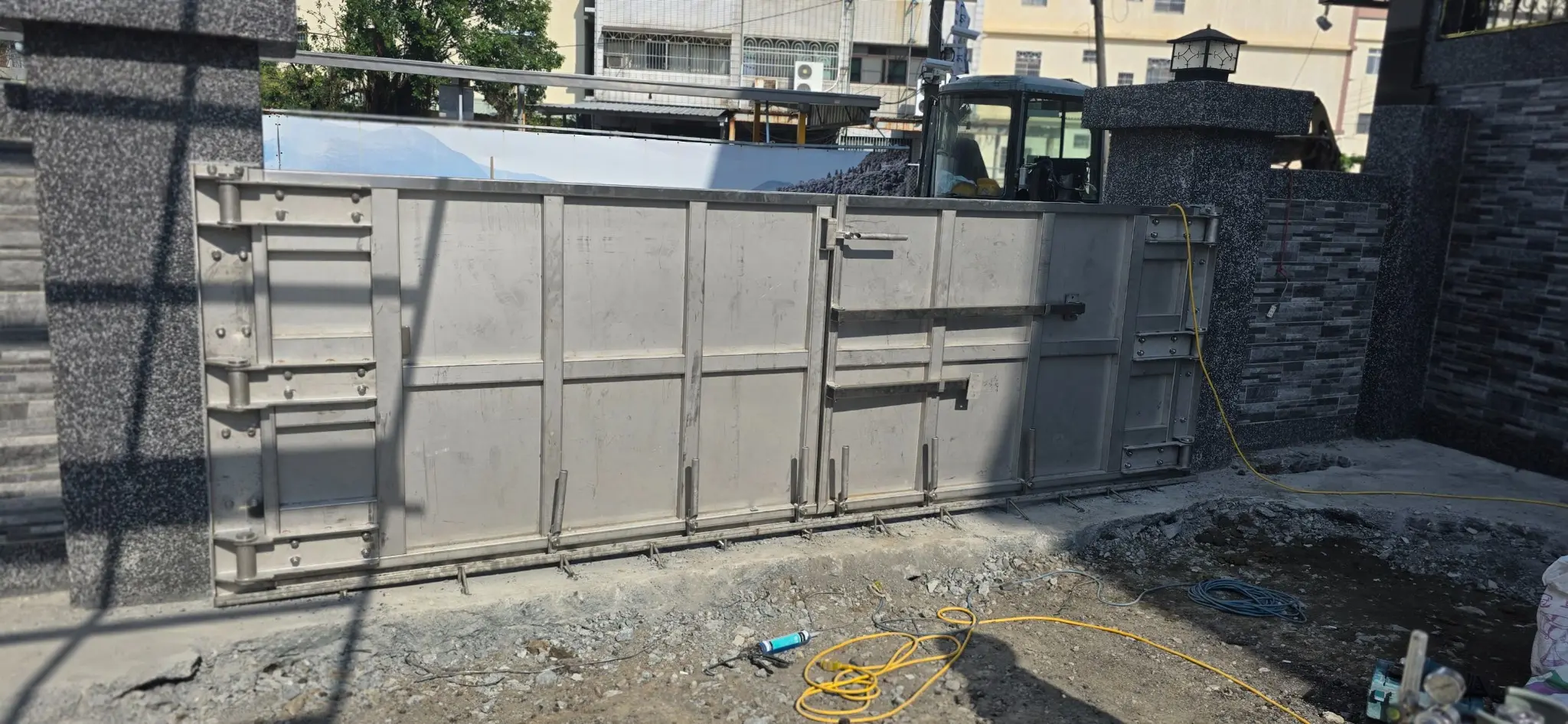
INDUSTRIAL
Industrial Facility Entrances
Custom gate sizing and operating layouts for larger plant entrances.
Technical Questions About Swing Flood Gates
Key considerations for specifying, operating, and maintaining hinged flood gate systems.
How much space is needed to store a swing flood gate?
A single-leaf gate generally needs wall-side space close to the gate leaf width, plus clearance for hinges, handles, and retaining fixtures. Some projects use a recessed storage niche; the original Chinese product guidance mentions approximately 150 mm depth as a concept, not a universal minimum.
How do I choose the required flood protection height?
Consider prior flood records, the project design water level, site elevations, and a suitable design allowance. The final height must be confirmed before fabrication because a finished swing gate generally cannot be extended by simply adding barrier panels.
Which configuration should I choose: single-leaf, double-leaf, or folding?
Selection depends on clear opening dimensions, gate weight and loads, swing radius, wall-side storage space, and operating requirements. Our team can review your drawings and recommend a suitable arrangement.
Can the gate be raised after installation?
These gates are custom fabricated as integrated leaves. Increasing the protection height usually requires redesign and may require a replacement gate leaf. Whether existing threshold or frame components can be retained must be assessed separately.
Will the threshold affect pedestrians or vehicles?
Depending on the design, the floor threshold may create a level difference. Vehicle transitions and accessibility should be reviewed early, and a suitable floor detail or transition treatment specified when needed.
Is every swing flood gate completely watertight?
Leakage performance depends on the design water level, gate construction, compression mechanism, gaskets, mounting surfaces, and installation. A universal zero-leakage claim cannot be made without a test method and acceptance criterion for the relevant configuration.
What maintenance is recommended?
As practical guidance, inspect and operate the gate about every three months and before the flood season, subject to local conditions and the project maintenance manual. Check the hinges, retaining fixtures, compression handles, threshold, and EPDM gaskets for wear and debris.
What information should I send for a technical review?
Provide the clear opening width and height, required flood protection level, preferred opening direction, available swing and storage space, site photos or drawings, anticipated quantities, and delivery destination.
INTERNATIONAL PRODUCT INQUIRIES
Need a Custom Swing Flood Gate?
Share your opening dimensions, design water level, site drawings, available swing clearance, quantities, and delivery destination. TIANSHUI supports custom manufacturing, OEM supply, and international project inquiries.